2026-10-11 · Marcus Thorne
DeSoto Water Heater Lifespan: When to Repair, When to Replace
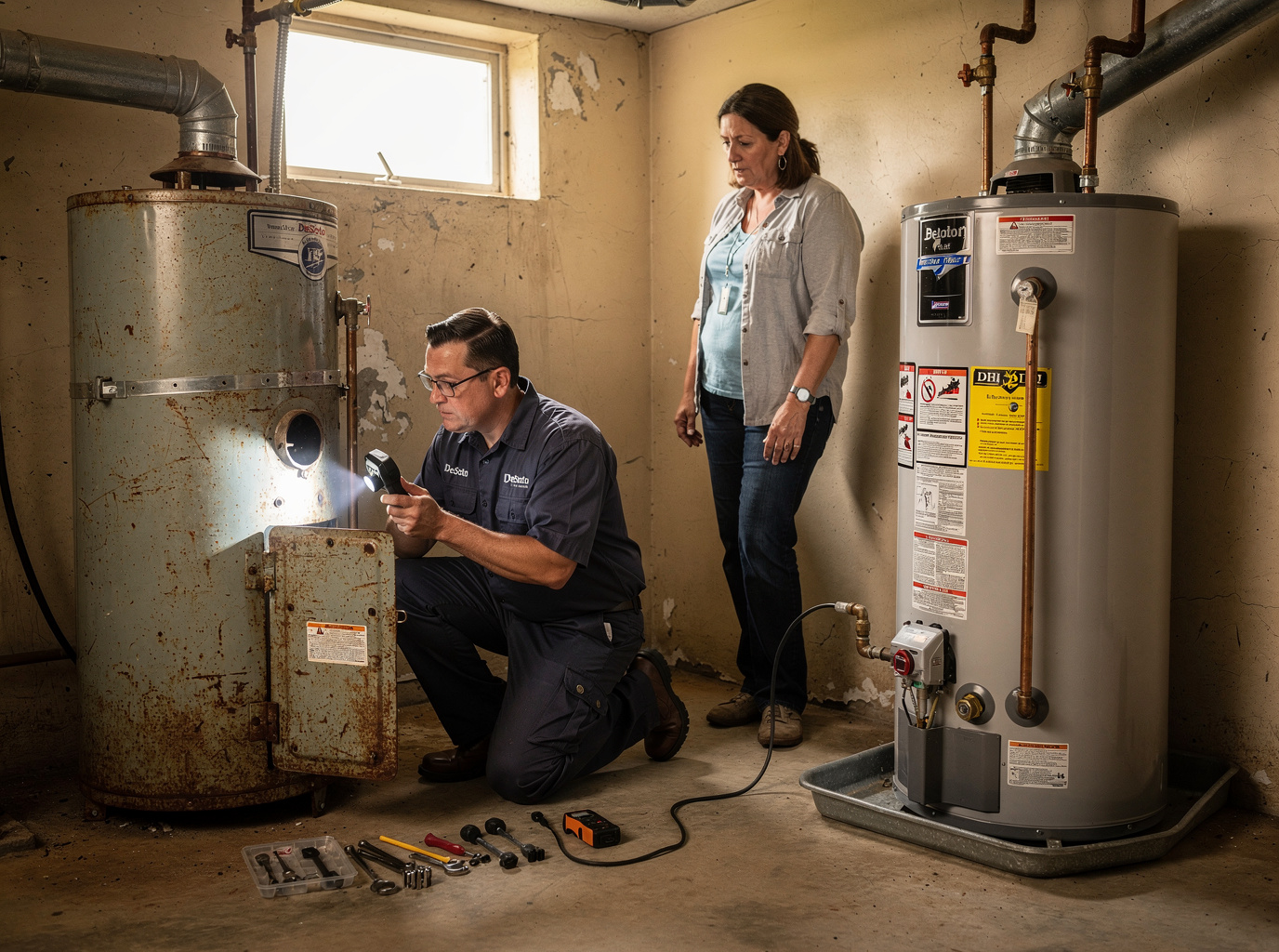
Most conventional tank water heaters in DeSoto, like those common in homes across Dallas County, typically last between 8 and 12 years. However, this lifespan isn't a hard and fast rule; several factors can influence whether your unit reaches the higher end of that range or fails prematurely. When faced with a malfunctioning water heater, the primary question for DeSoto homeowners is often whether a repair is a cost-effective solution or if it's time to invest in a new unit. Making the right decision involves evaluating the age of your unit, the nature of the problem, and the potential costs involved for your specific situation.
Factors Affecting Water Heater Lifespan in DeSoto
Several elements contribute to how long your water heater will reliably serve your home in DeSoto. Understanding these can help you anticipate issues and plan accordingly. The quality of installation is paramount; a poorly installed unit, even a brand new one, can experience problems much sooner than expected. The frequency of maintenance also plays a crucial role. Regular flushing to remove sediment, checking the anode rod, and inspecting for leaks can significantly extend a unit's life. Here in DeSoto, with our humid subtropical climate, units in garages or less-insulated areas might experience different wear patterns than those in climate-controlled spaces.
Another significant factor is water quality. DeSoto's water supply, while generally good, can still contain minerals that contribute to sediment buildup inside the tank. This buildup reduces efficiency and can lead to premature wear and tear on heating elements and the tank itself. The demand on the unit — how much hot water your household uses daily — also impacts its lifespan. A 40-gallon tank serving a family of five will likely wear out faster than the same size unit in a single-person household due to constant heating and cooling cycles. Finally, the original quality of the unit itself, from its manufacturer and components, directly correlates with its expected longevity.
When to Consider Water Heater Repair
Repair is often the most economical choice when your water heater is relatively young, typically under 6-7 years old, and the issue is minor and isolated. Common problems that usually warrant a repair include a faulty thermostat, a failing heating element (for electric units), a pilot light issue (for gas units), or a leaking pressure relief valve. For instance, if you notice your water heater leaking from the pressure relief valve, this is often a straightforward fix that doesn't necessarily indicate the end of your unit's life. These types of repairs are generally less expensive, ranging from $150–$600, depending on the part and labor involved.
If your water heater is experiencing issues like inconsistent hot water, strange noises, or minor leaks from connections, a professional inspection can determine the exact cause. Often, these symptoms can be resolved with targeted repairs. It's important to address these issues promptly, as delaying repairs can lead to more significant and costly problems down the line. For example, a small leak from a pipe connection, if left unattended, can escalate into a larger problem. We offer comprehensive services for various issues, including <a href="/services/water-heater-valve-and-connection-repair">Water Heater Valve and Connection Repair</a>, which often extends the life of your existing unit.
When to Consider Water Heater Replacement
There are clear indicators that suggest replacement is the more prudent long-term solution. The most critical factor is the age of your unit. If your water heater is over 10 years old and experiencing significant issues, replacement is usually recommended. At this age, components are nearing the end of their design life, and investing in multiple repairs often becomes a false economy. Another major sign for replacement is a leaking tank. Once the tank itself has corroded and is leaking, especially if it's <a href="/services/water-heater-leaking-from-bottom">leaking from the bottom</a>, repair is almost never an option. The tank's integrity is compromised, and patching it is not a safe or lasting solution.
Other reasons to consider replacement include frequent breakdowns, where you find yourself calling for repairs every few months. The cumulative cost of these repairs can quickly approach or exceed the cost of a new unit. Significant rust or corrosion on the tank or water connections is another red flag, indicating internal deterioration. If your water heater is no longer meeting your hot water demands, perhaps due to increased household size or usage, upgrading to a larger or more efficient model, such as a tankless unit, might be beneficial. While the upfront cost of a new water heater can range from $800–$2,500 for a conventional tank unit, considering the long-term savings on energy bills and avoided repair costs often makes it the smarter investment.
Making the Decision: Repair vs. Replace
The decision to repair or replace your water heater in DeSoto often boils down to a cost-benefit analysis, factoring in the unit's age and the severity of the problem. A good rule of thumb is the "50% Rule": if the cost of the repair is more than 50% of the cost of a new water heater, replacement is usually the better option, especially for older units. For example, if a new unit costs $1,500 and the repair is $800, it's likely better to replace, as other components are likely to fail soon.